

Wet fields, difficult terrain, fragmented plots and urgent treatments can strengthen the business case.
Product & Category Insights
Are Agricultural Spray Drones Worth It in 2026? The Real ROI, Regulations and 7 Factors to Calculate Before Buying
2026-09-07By HUIN Team
Are agricultural spray drones worth the investment in 2026? Compare labor, application speed, field access, payload, regulations, battery logistics and real operating costs before buying
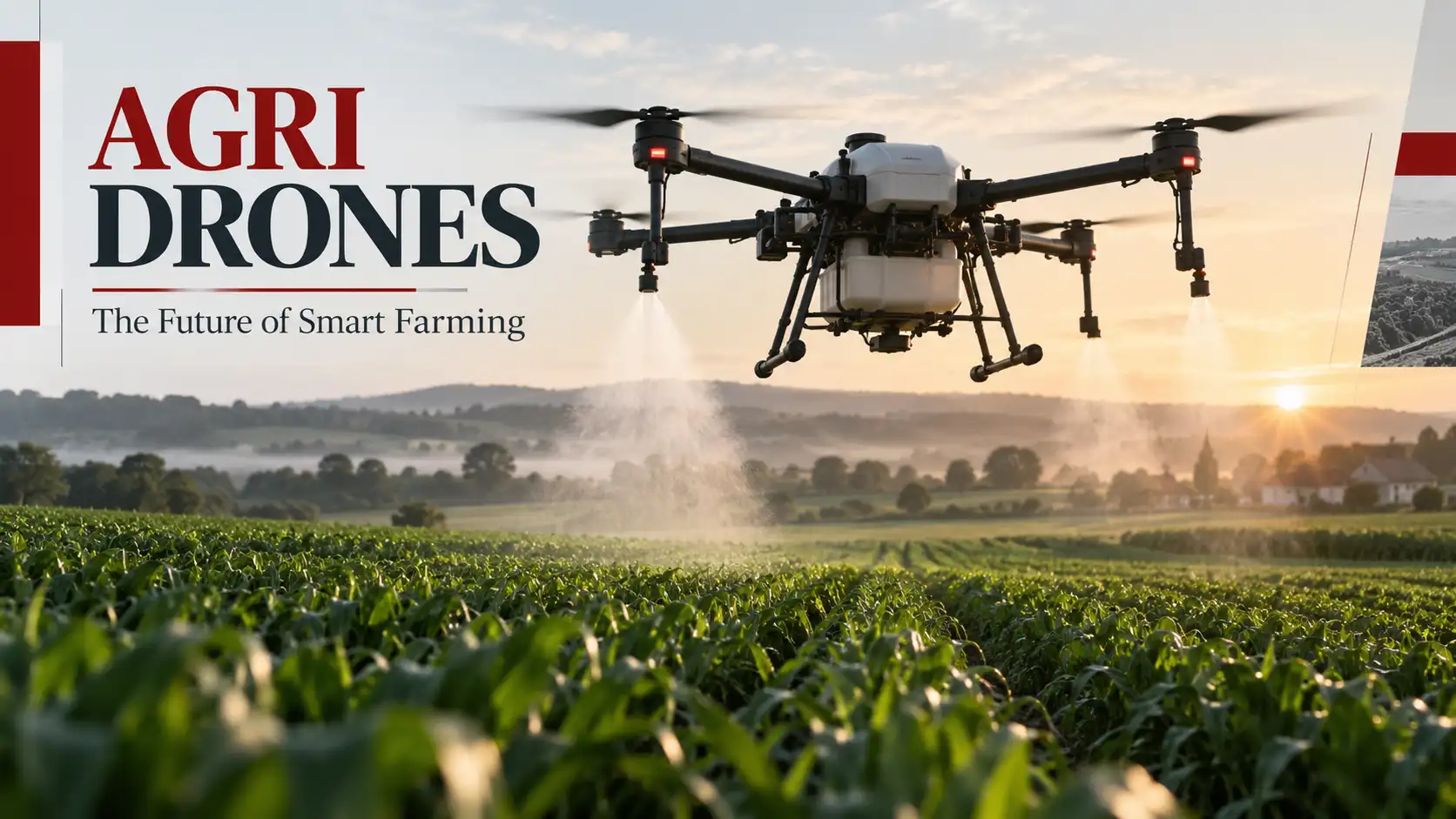
2026 Agricultural Drone Buying Guide
Before Comparing Drone Models, Compare the Economics
Agricultural drones can create significant value, but the right buying decision depends on field conditions, application requirements, real operating cost and local regulation — not simply payload or maximum speed.
Executive Summary
For most buyers, the key question is not whether agricultural drones work. It is where they create a stronger economic case than ground equipment or conventional aerial application.
Purchase price alone does not reveal true application cost per hectare.
Payload, charging, batteries, refill speed and field geometry all affect daily output.
Legal requirements for chemical application differ significantly between markets.
Agricultural Drones Have Moved Beyond the Experimental Stage
Agricultural drones are increasingly being used for work that previously depended almost entirely on tractors, ground sprayers or manned aircraft.
Modern agricultural platforms can support pesticide spraying, fertilizer spreading, seeding, crop monitoring, mapping and, on some larger platforms, material transport.
But faster adoption does not mean every farm should automatically buy one.
The Better Buying Question Will the drone reduce my real application cost, improve treatment timing, or solve a field-access problem that my current equipment cannot?
Answering that question requires looking beyond advertised tank capacity and theoretical hectares per hour.
Start With the Problem You Want the Drone to Solve
One of the biggest purchasing mistakes is beginning with aircraft specifications rather than the agricultural problem.
Agricultural drones can be particularly valuable when conventional equipment struggles with:
- Wet or muddy fields
- Steep terrain
- Orchards
- Fragmented plots
- Difficult field access
- Urgent pest outbreaks
- Crops vulnerable to wheel damage
- Agricultural labor shortages
A drone does not need to replace a tractor everywhere to create economic value.
If a drone allows an application to be completed during the correct treatment window when ground equipment cannot enter the field, its economic value may come from protecting crop yield rather than simply reducing spraying cost.
Calculate Cost Per Hectare — Not Just the Drone Purchase Price
Agricultural drone comparisons frequently begin with equipment price.
That is only the first number procurement teams should calculate.
Real Application Cost Per Hectare
Drone purchase cost allocation
+ Battery depreciation
+ Charging or generator cost
+ Labor
+ Water and chemical handling
+ Maintenance
+ Transportation
+ Insurance and compliance
+ Downtime
÷ Productive hectares
| Factor | Drone A | Drone B |
|---|---|---|
| Purchase Price | $15,000 | $22,000 |
| Average Capacity | 10 ha/hour | 18 ha/hour |
| Battery Requirement | Lower | Higher |
| Typical Fit | Lower annual utilization | High-volume contractor |
Drone A appears cheaper when purchase price is considered alone.
But a commercial application contractor treating thousands of hectares each season may find that a higher-capacity aircraft produces a lower operating cost.
Bigger does not automatically mean more economical.
Payload Is Important — But Payload Alone Does Not Determine Productivity
Larger tanks reduce refill cycles, but true field productivity depends on several variables working together.
Practical Field Productivity
Payload × Application Rate × Flight Speed × Refill Efficiency × Battery Turnaround × Field Layout
Larger aircraft may benefit from longer flight paths, fewer turns, fewer refill stops and high daily operating volume.
More maneuverable platforms may provide easier transport, setup and obstacle management.
Buyers should therefore match aircraft size to field geometry and application requirements rather than selecting a machine purely from maximum tank capacity.
Battery Logistics Can Determine Real Daily Productivity
A commercial agricultural drone operation is a system, not simply an aircraft with one battery.
Continuous field work may require multiple batteries, charging equipment, generator or grid power, cooling time and a reliable battery rotation process.
Aircraft Cycle
Spray Land Refill Battery Change Launch
Battery Cycle
Discharge Cool Charge Ready Return to Service
The two cycles need to remain synchronized.
A highly productive aircraft can still lose significant field time if batteries cannot be prepared quickly enough.
Questions to Ask Before Buying
- How many batteries are recommended for continuous operation?
- How long does real-world charging take?
- What electrical or generator capacity is required?
- How is battery temperature controlled?
- What is the expected cycle life?
- How does extreme heat affect charging and output?
Spray Quality Matters More Than Maximum Speed
A drone can cover a field quickly and still produce poor agronomic performance if application parameters are incorrect.
Spray performance can depend on:
- Droplet size
- Flow rate
- Nozzle or atomization system
- Operating height
- Flight speed
- Crop canopy structure
- Wind conditions
- Chemical formulation
- Application volume
The objective is not simply to move liquid from the tank to the field. It is to deliver the required active ingredient to the intended target.
This becomes particularly important in dense crops and orchards, where canopy penetration, drift management and coverage consistency may matter more than headline flight speed.
Regulation Can Be More Important Than Hardware
Agricultural drone regulations differ significantly between countries, and chemical application can involve additional rules beyond normal drone operations.
United States
Commercial agricultural dispensing operations can fall under FAA agricultural aircraft regulations, including 14 CFR Part 137.
Depending on the aircraft and operation, registration, pilot credentials, agricultural aircraft operator certification and applicable exemptions may be required.
Canada
Canada has expanded pathways for agricultural drone use, but federal, provincial, pilot and pesticide-related requirements still need to be verified before operation.
Chemical labels and local application rules remain important parts of compliance.
Verify Before Purchase
- Aircraft weight classification
- Registration requirements
- Pilot licensing
- Agricultural aviation rules
- Pesticide application requirements
- Chemical-label restrictions
- Insurance
- Local operating restrictions
Buying an agricultural drone does not automatically mean you are legally ready to spray.
Calculate Whether You Need to Own a Drone at All
Agricultural drones can deliver excellent productivity, but ownership is not automatically the best financial model.
Best suited to farms with sufficient acreage, frequent applications, trained operators and charging infrastructure.
A contractor can increase equipment utilization by operating across multiple farms.
Smaller farms may reduce capital, training, maintenance and regulatory burden by purchasing application as a service.
Equipment utilization is one of the most important variables in ROI.
A drone operating across 8,000 hectares per year has very different economics from the same aircraft operating across 500 hectares.
Where Agricultural Spray Drones Have the Strongest Economic Case
Drones avoid soil contact when ground machines risk compaction, crop damage or loss of field access.
Terraces, hillsides and mountainous farms can make conventional equipment difficult or unsafe.
Low-altitude operation offers flexibility in complex terrain and crop structures.
Small plots separated by roads, irrigation or terrain can reduce the efficiency of large machines.
Rapid deployment can be valuable when disease or pest pressure requires immediate treatment.
When crop value per hectare is high, timely treatment may justify a higher application cost.
Agricultural Drone vs Ground Sprayer vs Manned Aircraft
No application method wins in every operating environment.
| Factor | Agricultural Drone | Ground Sprayer | Manned Aircraft |
|---|---|---|---|
| Small / Irregular Fields | Strong | Moderate | Weak |
| Wet-Field Access | Strong | Weak | Strong |
| Large-Area Productivity | Moderate–Strong | Strong | Very Strong |
| Terrain Flexibility | Strong | Moderate | Strong |
| Initial Equipment Investment | Moderate | High | Very High |
| Crop Contact | None | Yes | None |
| Refill Frequency | Higher | Lower | Lower |
| Precision in Confined Areas | Strong | Strong | Lower |
Agricultural drones are better understood as another specialized application tool — not a universal replacement for every sprayer.
Practical Agricultural Drone Buying Checklist
Before requesting quotations, prepare these operating requirements first.
Farm & Crop
- Total hectares
- Main crops
- Field size
- Field shape
- Terrain
- Orchard or open field
- Application window
Spraying Requirements
- Application rate per hectare
- Chemical type
- Required droplet range
- Annual application frequency
- Desired operating speed
Operating Environment
- Temperature
- Wind conditions
- Altitude
- Distance between fields
- Electricity availability
Equipment & Commercial
- Required payload
- Battery quantity
- Charging equipment
- Generator requirements
- Spare parts
- Maintenance cost
- Local service availability
One Calculation Every Buyer Should Make
A simplified break-even calculation can quickly reveal whether ownership makes financial sense.
Annual Equipment Cost ÷ Savings Per Hectare = Break-Even Hectares
Assume annualized drone ownership cost is $18,000.
If the drone saves $6 per hectare compared with the current application method:
$18,000 ÷ $6 = 3,000 hectares/year
A farm treating 500 hectares may reach a very different conclusion from a contractor treating 8,000 hectares.
This is why there is no universal agricultural-drone ROI figure.
What Is Changing in 2026?
New platforms increasingly combine higher spraying and spreading capacity with broader multifunction capability.
Governments are gradually creating clearer operating pathways while maintaining pilot and chemical-application controls.
Cost per hectare, uptime, batteries, service availability and compliance are becoming more important than headline specifications.
Final Verdict: Are Agricultural Spray Drones Worth It in 2026?
For the right application, yes.
But not because drones are automatically cheaper than every alternative.
Their strongest economic value usually comes from combining:
Access + Timing + Precision + Labor Savings + Operational Flexibility
The best agricultural drone is not automatically the aircraft with the largest tank. It is the one that produces the lowest reliable cost for your specific application while maintaining required spray quality and compliance.
A Better Purchasing Sequence
Field Problem Application Requirement Regulatory Check Operating Cost Drone Specification
Evaluating Agricultural Drone Equipment?
Start with your country of operation, crop type, total farm area, terrain, intended application, required payload and expected daily operating area. These details make it possible to compare equipment based on the real agricultural application rather than only model specifications.
Get a Quick QuoteSources & Further Reading
- U.S. Federal Aviation Administration — Dispensing Chemicals by Drone
- U.S. Federal Aviation Administration — Commercial UAS Operations
- DJI Agriculture — Agricultural Drone Platforms
- South Dakota State University — Agricultural Research